Table of Contents
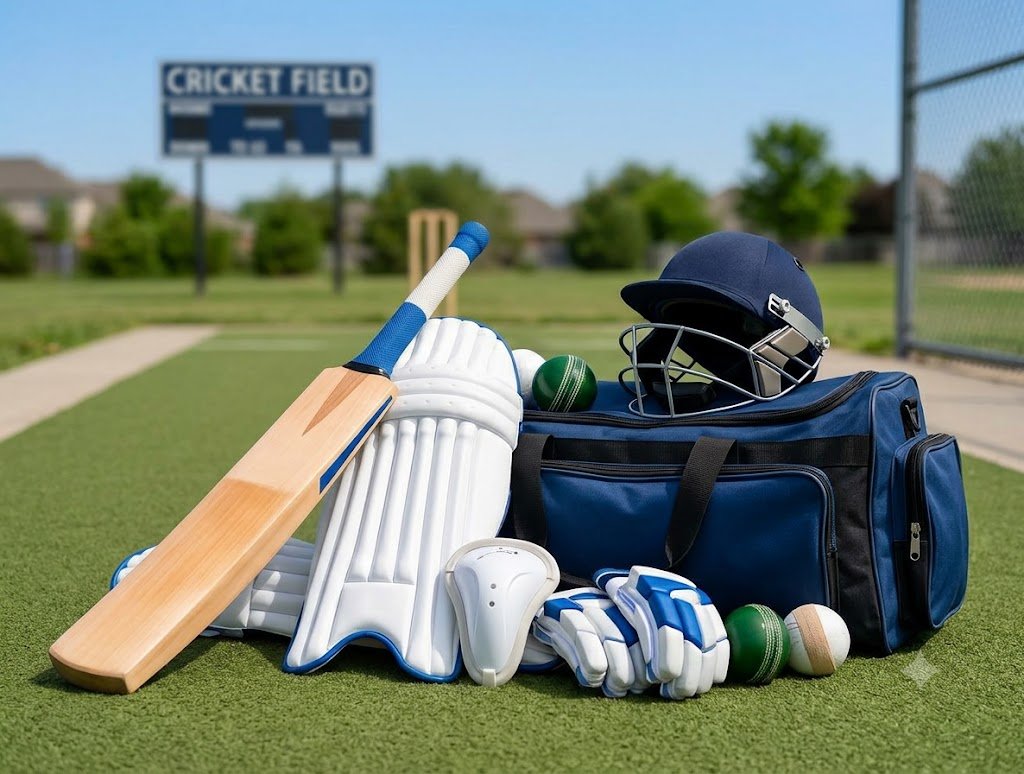
The first time I tried to buy a cricket bat in the US, I typed “cricket bat” into Amazon and got a page of what I can only describe as decorative wooden paddles, the kind of thing you’d hang on a garage wall, not swing at a 75 mph delivery. That’s the moment it clicked for me: buying cricket gear in America is a completely different experience than it is almost anywhere else the sport is played. There’s no neighborhood shop where the guy behind the counter watches you take a few practice swings and tells you flatly that you’re holding it wrong. You’re mostly on your own, ordering off a website, hoping the sizing chart isn’t lying to you.
So if you’re new to this, maybe you grew up on cricket highlights from your parents’ home country and just found a local club, or maybe you watched Major League Cricket last summer and got curious, here’s the honest version of what to buy, in what order, and what I’d genuinely skip until you know you’re staying with it.
The Weird Reality of Shopping for Cricket Gear in America
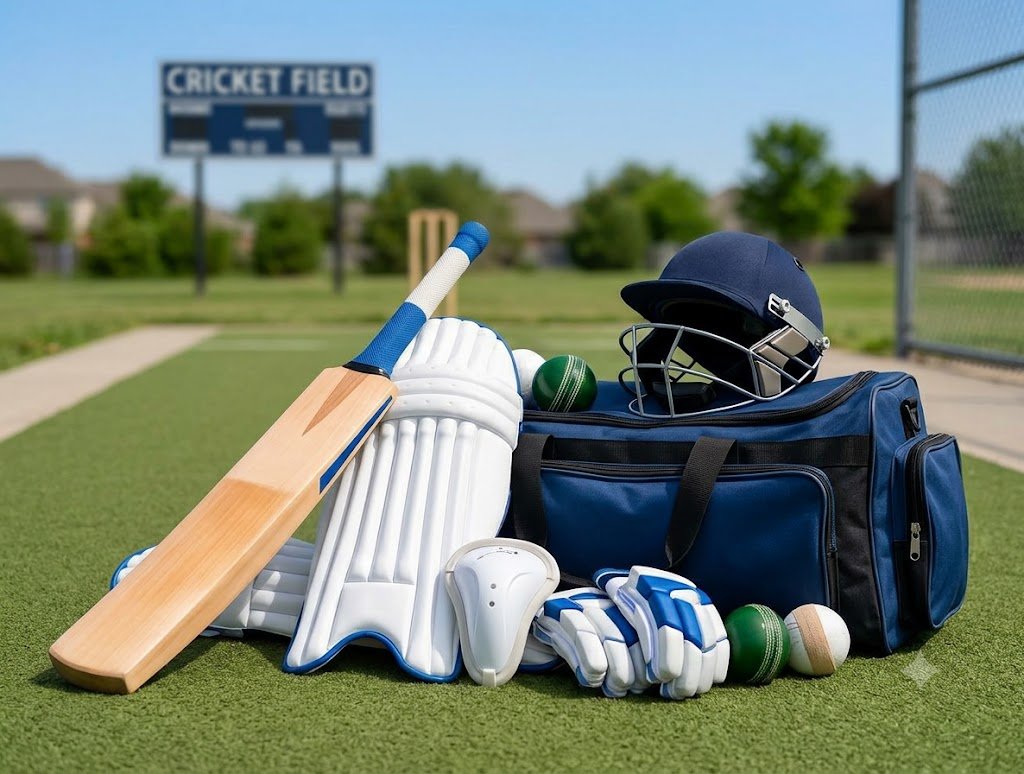
Cricket specific retail in the US basically comes down to three types of sellers: dedicated importers who know the sport (CricketStore USA, US Cricket Equipment, a few smaller regional ones run by former club players), general marketplaces like Amazon and eBay where quality is a total lottery, and your own club, which sometimes sells or lends starter kits at cost. None of these is a Dick’s Sporting Goods aisle where you can pick things up and feel the weight in your hand.
That matters more than people expect. A bat that’s technically “the right weight on paper” can feel completely different once it’s in your grip, because the balance point, how the weight is distributed along the blade, changes how it swings far more than the number on the sticker. Buying blind means you have to prioritize differently than a shopper in Sydney or Karachi would.
Start With the Bat, But Not the Way You Think
Everyone obsesses over willow grade first. Don’t. Obsess over weight and pick up.
For a true beginner, I’d point you toward a kashmir willow bat in the 2 lb 7 oz to 2 lb 9 oz range, priced somewhere around $40 to $80. English willow bats ($150 and up, sometimes well past $300) are genuinely better, lighter for their size, better rebound off the sweet spot, but here’s the thing nobody tells new players: you will not be timing the ball well enough in your first season to notice the difference. What you will notice is a bat that’s too heavy, because it shows up immediately as late shots, tired forearms after twenty minutes of net practice, and a swing that gets increasingly lazy as fatigue sets in.
I made this mistake myself. My first bat was a short handle, extra light model that I bought because a friend swore by it, except my friend is six foot two and I am not. The bat was too long for my reach, and I spent a month edging balls high off the toe that should have been easy defensive pushes. Lesson: buy for your own height and strength, not someone else’s recommendation, and if you can, get the actual dimensions (length, weight, edge thickness) rather than trusting a marketing label like “Player Edition.”
Protective Gear: Where US Beginners Actually Get It Wrong
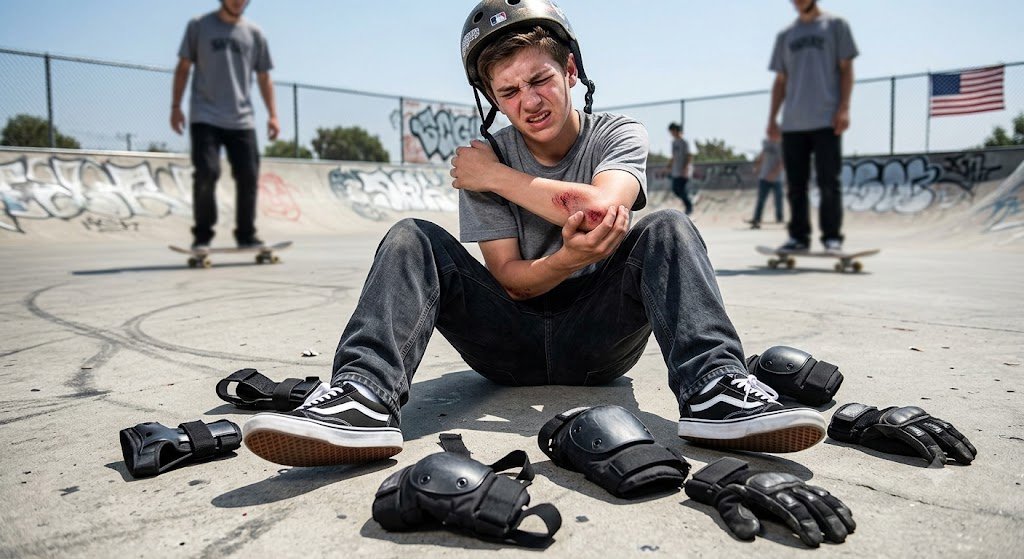
This is the section I feel strongest about, because it’s where I’ve seen the most rookie mistakes at local pickup games.
A lot of casual cricket in the US is played with a tennis ball, sometimes taped up for extra bounce, precisely because it’s more forgiving and doesn’t demand full protective gear. That’s fine for a Sunday park game. But the moment you step into anything using a proper hard, seamed cricket ball, club nets, a real match, the calculus changes completely, and I’d argue this is essential, no exceptions:
- Batting pads (leg guards): cover from just above the ankle to just below the knee, snugly enough that they don’t slide down mid run. A loose pad is worse than no pad, it shifts right when you need it in place.
- Batting gloves: the padding needs to sit across the thumb and first two fingers specifically, because that’s where a rising ball off a seam tends to catch you. Baseball batting gloves will not protect you the same way. I’ve seen someone learn this the hard way with a bruised thumb that kept them out for two weeks.
- Abdominal guard (the “box”): I’m not going to make a joke about this one. Wear it. Every session. No exceptions.
- Helmet with a grille: especially once you’re facing anyone bowling with real pace. Some tape ball and spin only formats skip helmets entirely, and that’s a call your league or club will make for you, but the second real pace is involved, I wouldn’t skip it, full stop.
Buying these as a set from a cricket importer usually runs $80 to $150 total, and it’s worth paying slightly more here than trying to piece together a kit from unrelated sporting goods, because fit and ball specific padding actually matter for injury prevention, not just comfort.
The Ball Question Nobody Explains Clearly
Here’s something that trips up almost every beginner in the US specifically: cricket balls are not one size fits all, and the ball dictates the whole game format. A hard leather ball (roughly $10 to $20 for a decent one) is “real” cricket, but if your local group plays tennis ball cricket, which is extremely common here because it’s safer and needs less gear, you’ll never touch a leather ball. Ask whoever runs your game before buying anything ball related. I’ve watched someone show up to their first pickup game with an expensive leather ball, only to find out the entire group plays taped tennis ball on weekends. Wasted money, slightly embarrassing, entirely avoidable with one text message beforehand.
The Unglamorous MVP: A Real Kit Bag
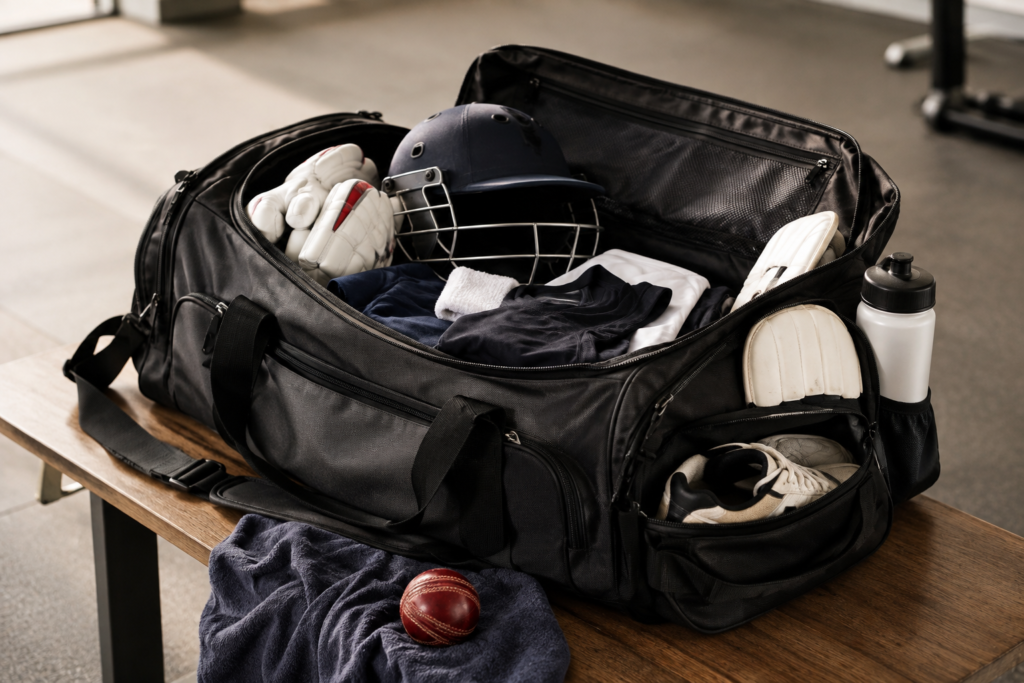
Nobody gets excited about a cricket bag, but I promise you’ll be grateful for one the first time you’re loading pads, gloves, a helmet, and a bat into your car before sunrise for an early match. A proper cricket kit bag is long enough to fit the full bat length without folding anything, and has separate compartments so your gloves don’t end up smashed under a helmet. It’s a $30 to $50 purchase that solves a very specific, very annoying problem: trying to cram gear meant for a bat about two and a half feet long into a generic gym duffel built for sneakers and a water bottle.
What I’d Genuinely Skip at First
- Wicketkeeping gloves and pads: only relevant if you’re actually keeping wicket, and most clubs keep a loaner set on hand specifically because new keepers rotate in and out while they figure out if they like the position.
- Cricket specific spikes: trainers with reasonable grip are completely fine for a first season. Proper spiked cricket shoes ($80 and up) are also pitch specific, some artificial or matting surfaces don’t even allow metal spikes, so buying early risks buying wrong.
- Arm guards and thigh guards: genuinely useful once you’re facing consistent pace bowling, genuinely unnecessary in your first few months of nets and casual matches.
My Honest Take
If I were advising a friend starting from zero, I’d tell them to spend real money in exactly two places: the bat and the helmet. A poorly weighted bat doesn’t just feel bad, it actively trains bad habits into your technique before you’ve built any good ones to unlearn later. And a missing or cheap helmet isn’t a comfort trade off, it’s a real safety risk the moment pace bowling enters the picture. Everything else on this list, pads, gloves, the bag, can absolutely be entry level gear for your first year without holding your game back at all.
The other thing I’d say, and I mean this more strongly than any individual gear recommendation: find your club or league before you buy a single item. So much beginner gear in the US gets bought before anyone’s confirmed what format they’ll actually be playing, and tennis ball cricket and leather ball cricket need genuinely different equipment. A quick search for local cricket Meetups or a Facebook group in your city will tell you more about what to buy than any gear guide, mine included.
Conclusion
Shopping for cricket gear in the US takes more patience than it would in a cricket first country, mostly because there’s no shop to walk into and no old timer to correct your grip on the spot. But it’s not complicated once you know the order of priorities: get the bat weight right before you worry about willow grade, don’t compromise on protective gear the moment a hard ball enters the picture, and hold off on the extras until you actually know cricket is a sport you’re sticking with, not just one you tried for a summer. The right gear won’t make you a better player overnight. But the wrong gear absolutely can slow you down, and that’s the one mistake worth avoiding from day one.
Best Cricket Gear for Beginners in the US
if you want to buy a Best cricket gear in the us , you can read my article and visit my website.
premiumsportss.com