
Table of Contents
Walk into any cricket store and you’ll find rows of bats that look almost identical same shape, same glossy finish, same price tags staring back at you. Yet ask any experienced coach and they’ll tell you the same thing: the “best” bat in the shop is worthless if it doesn’t suit the player holding it. A bat that’s too heavy will slow your shots down. One that’s too light won’t carry the ball to the boundary. And a bat that’s the wrong length will throw off your entire stance. Getting the size and weight right isn’t a minor detail it’s the foundation of good batting.
Here’s a practical, no-nonsense guide to picking a bat that actually fits you.
bat size and weight
Start With Height, Not Age
Most sporting goods stores use age-based size charts, and while they’re a handy starting point, they can be misleading. Two ten-year-olds can differ in height by six inches, and a bat sized for their age group won’t fit both of them equally well. Height is a far more reliable measure.
As a rough guide:
| Player Height | Recommended Bat Size |
|---|---|
| Under 4’0″ | Size 0–1 (Harrow) |
| 4’0″ – 4’3″ | Size 2 |
| 4’3″ – 4’6″ | Size 3 |
| 4’6″ – 4’9″ | Size 4 |
| 4’9″ – 5’0″ | Size 5 |
| 5’0″ – 5’3″ | Size 6 |
| 5’3″ – 5’6″ | Harrow |
| 5’6″ and above | Short Handle (Full Size) |
These numbers are guidelines, not gospel. Two players of the same height might still prefer different sizes depending on arm length, strength, and personal comfort. Think of the chart as a shortlist, not a final answer.
The Simple “Stand and Measure” Test
Once you’ve narrowed things down using height, try this old-school but reliable test: stand upright, arms relaxed by your sides, and rest the bat on the ground with the toe touching the floor. The top of the handle should reach somewhere between your hip bone and the bottom of your palm when your arm hangs naturally. If the bat reaches your armpit, it’s too long. If it stops well below your hip, it’s too short.
This test matters more than most people realize, because bat length directly affects your backlift and stance. A bat that’s too long forces you to crouch or adjust your grip awkwardly, which throws off timing. Too short, and you’ll find yourself reaching for deliveries you shouldn’t have to stretch for.
Weight Is Where Most People Get It Wrong
Here’s the part that trips up even experienced players: a heavier bat does not automatically mean more power. Bat speed generates power just as much as bat mass does, and a bat you can’t control quickly enough will actually cost you shots, not add to them.
Cricket bats generally range from around 2 lb 6 oz (roughly 1.1 kg) on the lighter end to 2 lb 12 oz–3 lb (about 1.3 kg) on the heavier end for adults. Junior bats are naturally lighter, sometimes well under 2 lb.
A good rule of thumb: choose the lightest bat that still gives you the “feel” you want when you play a shot. Beginners and players who rely on timing and placement (rather than raw power) usually do better with lighter bats. Power hitters with strong wrists and forearms can often handle and benefit from a slightly heavier one. But even top-order batters who play long innings often prefer lighter bats simply because swinging a heavy bat for hours is exhausting, and fatigue ruins technique far faster than a lack of power does.
Do the Pick-Up Test
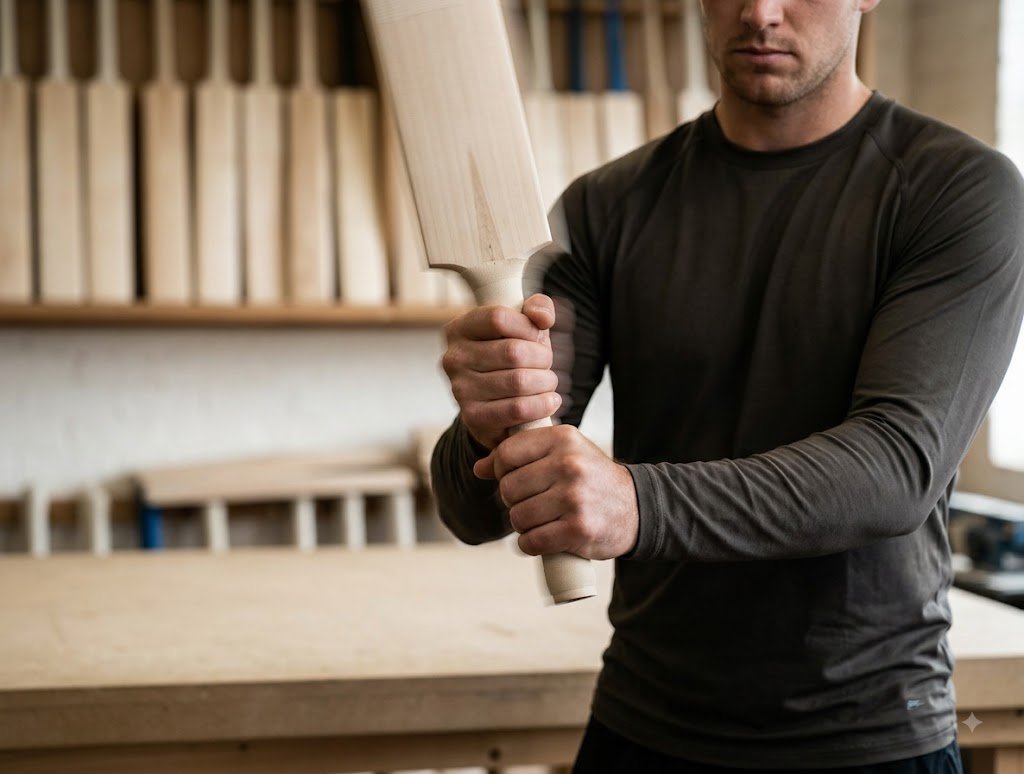
Weight on a scale only tells half the story. Two bats can weigh exactly the same yet feel completely different in your hands this is called “pick-up.” A bat with wood concentrated toward the middle (a fuller “spine”) will feel lighter than its actual weight suggests, because the weight is balanced closer to where you grip it. A bat with wood pushed toward the edges or the toe will feel bottom-heavy, even if it’s technically lighter on paper.
To test this properly:
- Hold the bat with both hands as if you’re about to play a shot.
- Lift it up and down in a short, quick motion, like you’re playing a drive.
- Notice whether it feels like an extension of your arms or like you’re wrestling with dead weight.
If it feels effortless to whip through the shot, that’s good pick-up and it often matters more than the number printed on the label.
Willow Grade and Its Effect on Weight
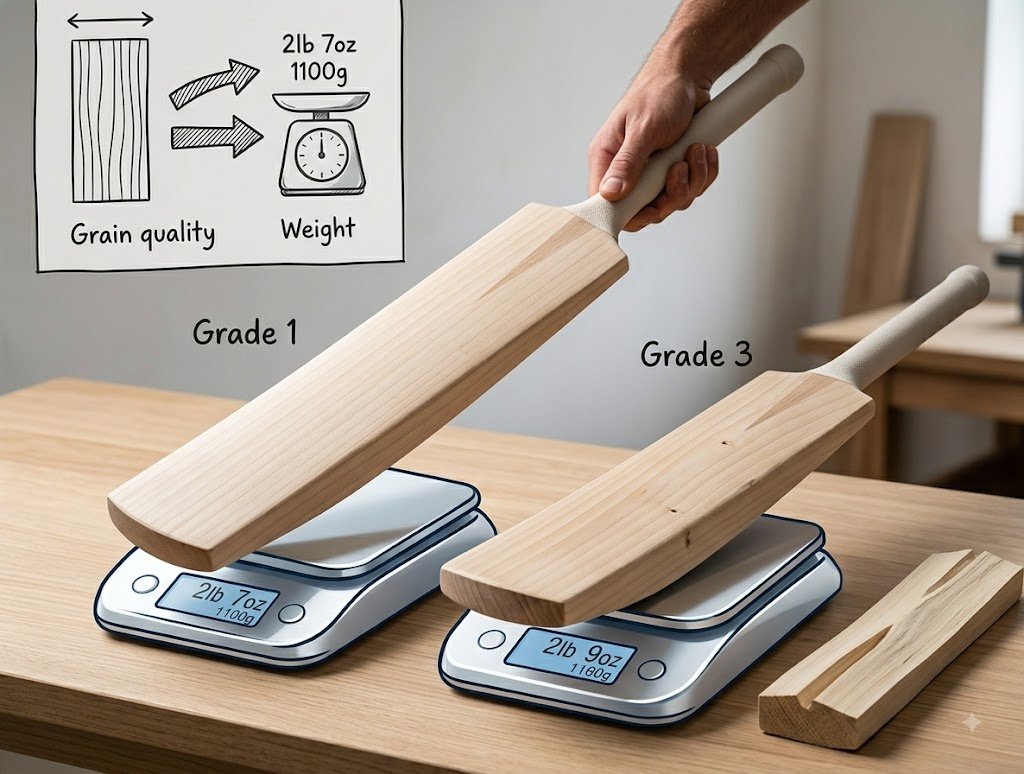
English willow and Kashmir willow are the two dominant materials used in bat-making, and they behave differently. English willow is softer, lighter, and more responsive, which is why it’s the standard for professional and serious club cricket you get performance without needing extra mass. Kashmir willow is denser and heavier for the same size, which is why it’s often used in cheaper, entry-level bats. If you’re finding it hard to get a light bat that still performs well, willow grade not just size is often the reason.
Don’t Forget the Handle and Grip
The handle’s flexibility and the thickness of the grip also influence how a bat feels in play, even though they don’t show up on any size chart. A stiffer handle transmits more shock on mistimed shots, while a well-sprung cane handle absorbs vibration and makes the bat feel lighter through the swing. Adding extra grips increases the handle’s circumference and can shift the balance slightly, so if you’re between two bat weights, sometimes changing the grip rather than the bat itself solves the problem.
When in Doubt, Go Slightly Lighter
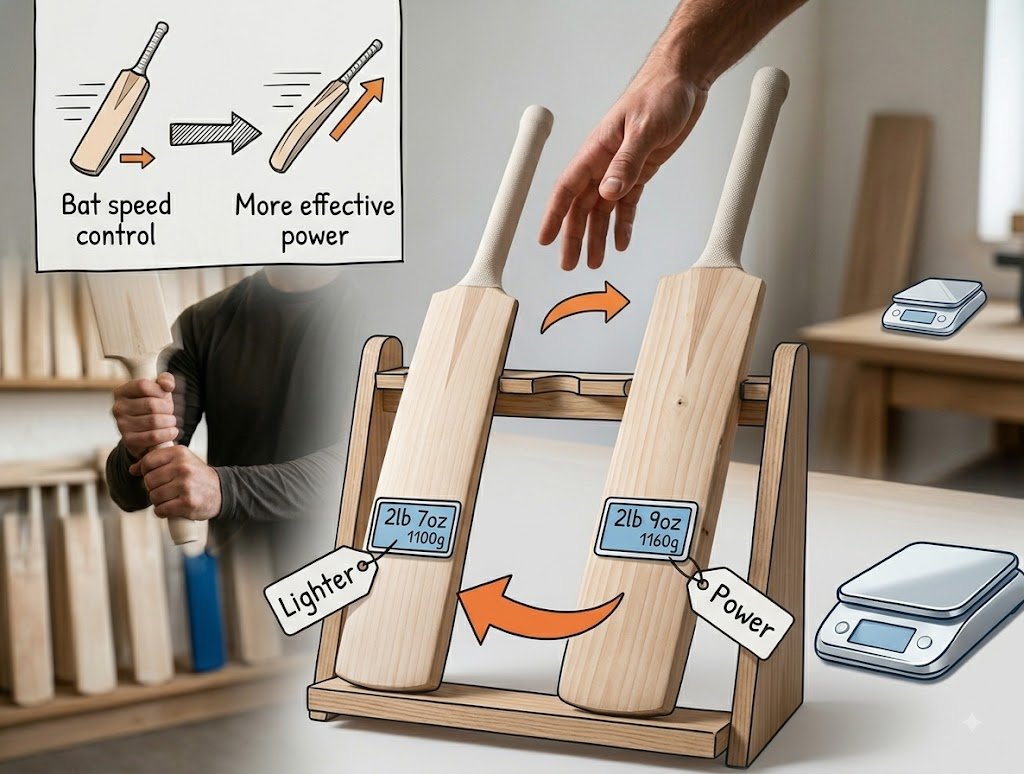
If you’re torn between two sizes or weights, lean toward the lighter option. It’s far easier to add strength and adjust technique to a lighter bat over time than to fight against a heavy one that slows your bat speed and tires you out mid-innings. Most coaches will tell you that control beats raw power, especially for developing players — and a well-balanced, correctly sized bat gives you exactly that control.
Final Word
Choosing a cricket bat isn’t about picking the most expensive one on the rack or copying what your favorite player uses. It’s about matching the bat to your height, strength, and playing style through a combination of measurement, feel, and a bit of trial and error. Visit a store if you can, test a few bats in hand rather than relying on specs alone, and remember: the right bat is the one that disappears in your hands and lets you focus purely on the ball.
1.How to choose the correct size and weight for a cricket bat
visit my site premiumsportss.com